
Introduction to MIG Welding Guns
2025-10-29


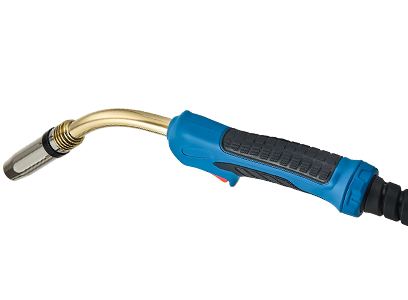
MIG welding guns, also known as Gas Metal Arc Welding (GMAW) guns, are widely used in various industries for their ability to produce high-quality welds quickly and efficiently. These guns utilize a continuous wire feed system, which allows for a smooth and consistent welding process.
Components of MIG Welding Guns
- Nozzle: The nozzle directs the shielding gas and protects the weld pool from contamination.
- Contact Tip: This is where the welding wire is fed through and makes contact with the workpiece, allowing for the arc to be established.
- Gas Diffuser: It helps in distributing the shielding gas evenly around the weld area.
- Trigger: The trigger controls the wire feed and gas flow, allowing the welder to start and stop the welding process easily.
- Cable Assembly: This includes the power cable and gas hose, connecting the gun to the welding machine.
Working Principle
MIG welding guns operate by feeding a continuous wire electrode through the gun and into the weld pool. An electric arc is created between the wire and the workpiece, melting both the wire and the base material. The shielding gas, typically argon or a mixture of argon and carbon dioxide, protects the molten weld from atmospheric contamination, ensuring a strong and clean weld.
Advantages of MIG Welding Guns
- Speed: MIG welding is faster than many other welding processes due to the continuous wire feed.
- Ease of Use: It is relatively easy to learn, making it suitable for both beginners and experienced welders.
- Versatility: MIG welding can be used on a variety of materials, including steel, aluminum, and stainless steel.
- Minimal Cleanup: The process produces less slag compared to other welding methods, resulting in less post-weld cleanup.
Applications
MIG welding guns are used in various applications, including:
- Automotive Industry: For manufacturing and repairing vehicle components.
- Construction: In building structures and frameworks.
- Manufacturing: For fabricating metal products and machinery.
- Art and Sculpture: In creating metal art pieces.
Selecting the Right MIG Welding Gun
Choosing the right MIG welding gun depends on several factors, including:
- Material Type: Different materials may require specific types of guns and settings.
- Welding Thickness: The thickness of the material being welded can influence the choice of gun and wire diameter.
- Welding Position: Some guns are better suited for specific positions, such as flat, horizontal, or vertical welding.
Maintenance Tips
To ensure the longevity and performance of MIG welding guns, consider the following maintenance tips:
- Regular Cleaning: Keep the nozzle and contact tip clean to prevent spatter buildup.
- Inspect Cables: Check for any wear or damage to the cables and replace them if necessary.
- Proper Storage: Store the gun in a dry place to prevent corrosion and damage.
- Check Gas Supply: Ensure that the shielding gas supply is adequate and free from leaks.
In conclusion, MIG welding guns are vital tools in the welding industry, offering speed, versatility, and ease of use. Understanding their components, working principles, and maintenance can significantly enhance welding performance and quality.
TAG:
Related Posts

Understanding TIG Torch Hoses: Essential Knowledge for Welders
MESSAGES
We will contact you within one working day. Please pay attention to your email.
Qucik Link
Contact
WhatsApp: +8615833370366
E-mail: zhaoyiqian@hrwelding.cn
Address: No. 105 Yongming Street, Dahe Road, East of Renqiu City, Hebei, China