
Essential MIG Welding Accessories for Optimal Performance
2025-09-15


MIG welding, also known as Gas Metal Arc Welding (GMAW), is a popular method among professionals for its speed and versatility. To maximize the efficiency and effectiveness of MIG welding, several accessories play a crucial role. Understanding these accessories can elevate the quality of your work and streamline your welding operations.
One of the most vital MIG welding accessories is the welding
MIG welding, also known as Gas Metal Arc Welding (GMAW), is a popular method among professionals for its speed and versatility. To maximize the efficiency and effectiveness of MIG welding, several accessories play a crucial role. Understanding these accessories can elevate the quality of your work and streamline your welding operations.
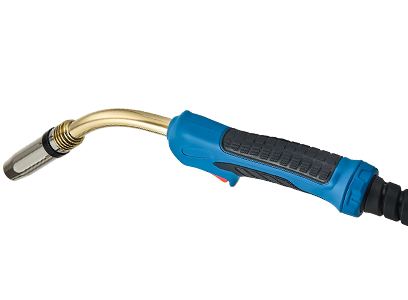
One of the most vital MIG welding accessories is the welding gun. The welding gun is the primary tool used to deliver the welding wire and shielding gas to the workpiece. Selecting a gun that matches your project requirements is essential; factors such as the type of welding wire, the thickness of the materials being welded, and the required amperage all influence the choice of gun. A reliable welding gun should also have a comfortable grip to minimize fatigue during extended use.
Another crucial accessory is the contact tip. This small component is responsible for guiding the welding wire and ensuring a stable arc. Choosing the right contact tip size is essential for achieving optimal performance. A tip that is too large can lead to poor arc stability, while one that is too small may restrict the wire feed, resulting in inconsistent welds. Regular maintenance and replacement of contact tips can significantly improve welding efficiency.
Welding wire itself is another critical MIG welding accessory. Depending on the application, different types of welding wires—such as solid wire, flux-cored wire, and stainless steel wire—are available. Each type has its advantages and is suitable for specific materials and applications. Understanding the characteristics and uses of various welding wires will help professionals select the right one for their projects, ensuring strong and durable welds.
Shielding gas is also an essential element in MIG welding. It protects the weld pool from contamination and oxidation, which can weaken the weld. The choice of shielding gas—such as argon, carbon dioxide, or a mixture of both—depends on the material being welded and the desired results. Using the correct shielding gas in conjunction with your welding technique ensures a clean and strong weld.
In addition to the core components, various safety accessories should not be overlooked. Personal protective equipment (PPE) such as welding helmets, gloves, and jackets are crucial for protecting against harmful UV rays, sparks, and heat. Investing in high-quality PPE will enhance safety and comfort, allowing welders to focus on their work without distraction.
Lastly, investing in tools like wire feeders and welding carts can improve workspace efficiency. Wire feeders automate the wire supply, reducing the amount of manual handling required, while welding carts provide a mobile solution for storing equipment and supplies.
In summary, understanding and utilizing the right MIG welding accessories—from welding guns to safety gear—are essential for professionals in the welding industry. By selecting the appropriate tools and maintaining them regularly, welders can ensure high-quality work and enhance their overall productivity.
One of the most vital MIG welding accessories is the welding gun. The welding gun is the primary tool used to deliver the welding wire and shielding gas to the workpiece. Selecting a gun that matches your project requirements is essential; factors such as the type of welding wire, the thickness of the materials being welded, and the required amperage all influence the choice of gun. A reliable welding gun should also have a comfortable grip to minimize fatigue during extended use.
Another crucial accessory is the contact tip. This small component is responsible for guiding the welding wire and ensuring a stable arc. Choosing the right contact tip size is essential for achieving optimal performance. A tip that is too large can lead to poor arc stability, while one that is too small may restrict the wire feed, resulting in inconsistent welds. Regular maintenance and replacement of contact tips can significantly improve welding efficiency.
Welding wire itself is another critical MIG welding accessory. Depending on the application, different types of welding wires—such as solid wire, flux-cored wire, and stainless steel wire—are available. Each type has its advantages and is suitable for specific materials and applications. Understanding the characteristics and uses of various welding wires will help professionals select the right one for their projects, ensuring strong and durable welds.
Shielding gas is also an essential element in MIG welding. It protects the weld pool from contamination and oxidation, which can weaken the weld. The choice of shielding gas—such as argon, carbon dioxide, or a mixture of both—depends on the material being welded and the desired results. Using the correct shielding gas in conjunction with your welding technique ensures a clean and strong weld.
In addition to the core components, various safety accessories should not be overlooked. Personal protective equipment (PPE) such as welding helmets, gloves, and jackets are crucial for protecting against harmful UV rays, sparks, and heat. Investing in high-quality PPE will enhance safety and comfort, allowing welders to focus on their work without distraction.
Lastly, investing in tools like wire feeders and welding carts can improve workspace efficiency. Wire feeders automate the wire supply, reducing the amount of manual handling required, while welding carts provide a mobile solution for storing equipment and supplies.
In summary, understanding and utilizing the right MIG welding accessories—from welding guns to safety gear—are essential for professionals in the welding industry. By selecting the appropriate tools and maintaining them regularly, welders can ensure high-quality work and enhance their overall productivity.
TAG:
Related Posts

Understanding TIG Torch Hoses: Essential Knowledge for Welders
TIG torch hoses are vital components in the welding process, particularly for tungsten inert gas (TIG) welding, which is known for its precision and versatility. These hoses transport the shielding gas, which is crucial for protecting the weld pool from atmospheric contamination. Understanding the specifications and maintenance of TIG torch hoses can significantly impact your welding efficiency an
MESSAGES
We will contact you within one working day. Please pay attention to your email.
Qucik Link
Contact
WhatsApp: +8615833370366
E-mail: zhaoyiqian@hrwelding.cn
Address: No. 105 Yongming Street, Dahe Road, East of Renqiu City, Hebei, China